How community leaders can support kids and families through disasters
Community leaders play a vital role in helping families prepare, respond and recover from disasters.
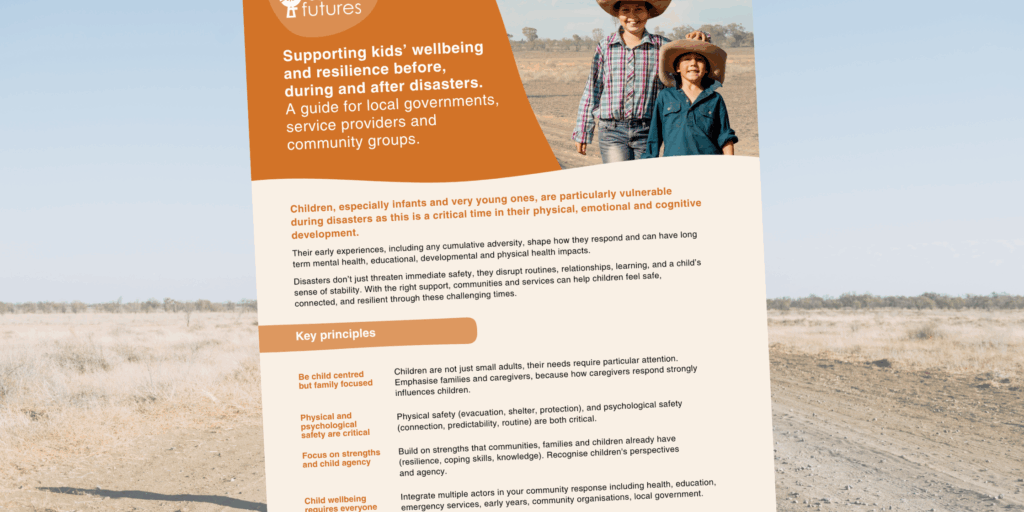
Children, especially infants and very young ones, are particularly vulnerable during disasters as this is a critical time in their physical, emotional and cognitive development.
Their early experiences, including any cumulative adversity, shape how they respond and can have long term mental health, educational, developmental and physical health impacts.
Disasters don’t just threaten immediate safety, they disrupt routines, relationships, learning, and a child’s sense of stability. With the right support, communities and services can help children feel safe, connected, and resilient through these challenging times.
Be child centred but family focused
- Children are not just small adults, their needs require particular attention. Emphasise families and caregivers, because how caregivers respond strongly influences children.
Physical and psychological safety are critical
- Physical safety (evacuation, shelter, protection), and psychological safety (connection, predictability, routine) are both critical.
Focus on strengths and child agency
- Build on strengths that communities, families and children already have (resilience, coping skills, knowledge). Recognise children’s perspectives and agency.
Child wellbeing requires everyone
- Integrate multiple actors in your community response including health, education, emergency services, early years, community organisations, local government.
Integrate into local plans
- Consistent planning and review of practice in local disaster planning will build capacity in the community over time.
Tips to prepare, respond and recover
- Download the A4 information sheet for practical ways community leaders can prepare, respond and recover in disasters.
Helpful Resources
- Birdie’s Tree (0-8 year olds)
- Emerging Minds (0-12 year olds)
- Headspace (12-25 year olds)
- Preparing an emergency plan
- Australian Breastfeeding Association
- ABC Kids
- Phoenix Australia