How parents and carers can support kids before, during and after disasters
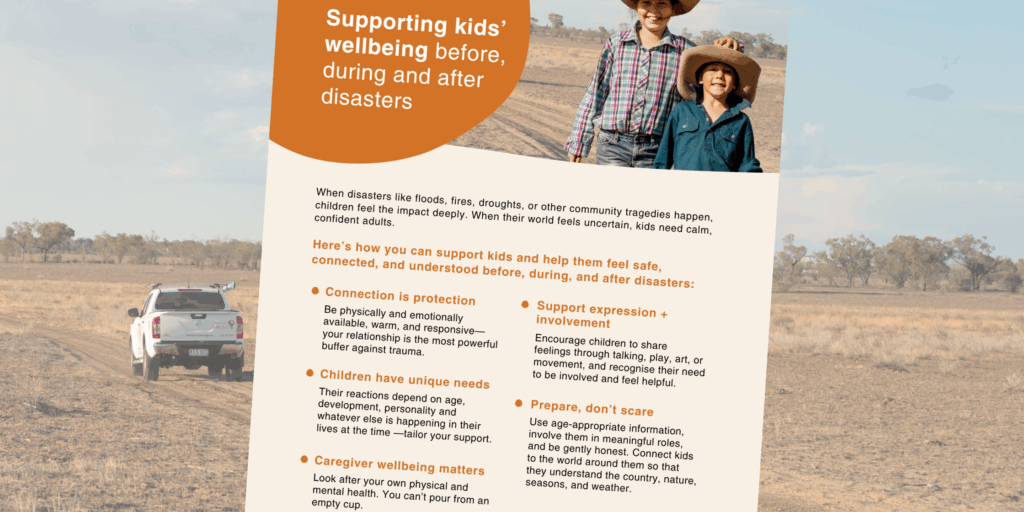
When disasters like floods, fires, droughts, or other community tragedies happen, children feel the impact deeply. Here’s how you can help kids before, during and after disasters to feel safe, connected and understood.
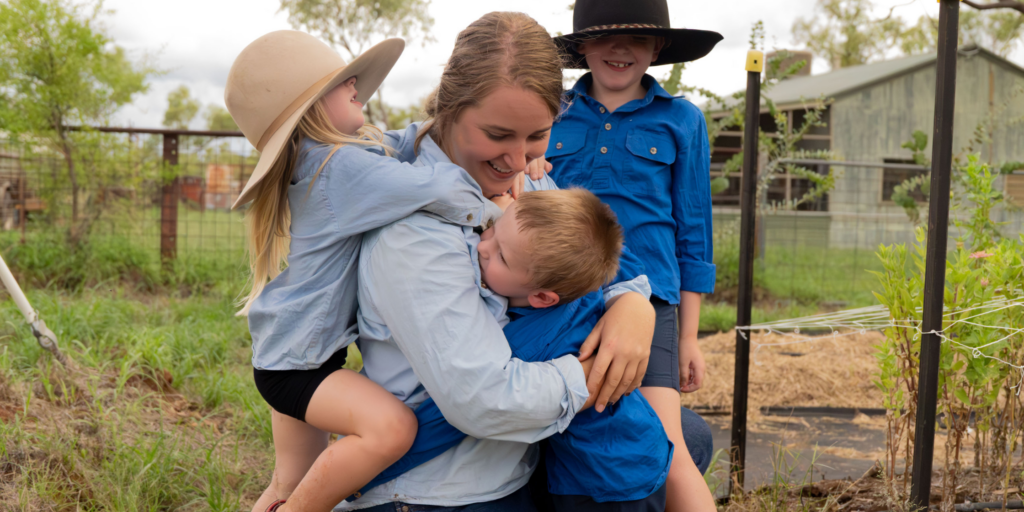
Connection is protection: Be physically and emotionally available, warm, and responsive—your relationship is the most powerful buffer against trauma.
Children have unique needs: Their reactions depend on age, development, personality and whatever else is happening in their lives at the time, so tailor your support.
Caregiver wellbeing matters: Look after your own physical and mental health. You can’t pour from an empty cup.
Support expression and involvement: Encourage children to share feelings through talking, play, art, or movement, and recognise their need to be involved and feel helpful.
Prepare, don’t scare: Use age-appropriate information, involve them in meaningful roles, and be gently honest. Connect kids to the world around them so that they understand the country, nature, seasons, and weather.
Before a disaster – prepare
- Talk about seasons, weather, and disasters
- Create a family emergency plan with your children
- Help your children express their feelings openly
- Connect with others who can provide mutual support if needed
During a disaster – respond
- Activate you plan and ensure physical safety, including taking care of yourself
- Keep your children with you if possible as this lowers the risk of trauma
- Try and maintain familiar routines and relationships
- Let children express themselves and find ways where they can help
After a disaster – support recovery
- Watch for signs of distress, and seek professional help if you are unsure about how your child is coping
- Help make sense of the event and let kids help in ways that are not distressing or re-traumatising
- Rebuild connections and routines as quickly as practicable
- Talk with your children about what was learned and incorporate this into your emergency plan for future disasters
Helpful resources:
- Birdie’s Tree (0-8 year olds)
- Emerging Minds (0-12 year olds)
- Headspace (12-25 year olds)
- Preparing an emergency plan